
A healthy smile starts with the right dental care, and for people living in Charlotte, NC, keeping your teeth and gums healthy is an important part of overall well-being. So, whether it’s routine checkups and cleanings, treating cavities, or exploring restorative and cosmetic options, modern dentistry offers solutions to help people in this region maintain a confident, healthy smile at every stage of life.
But this also means understanding preventive care, choosing the right dental professionals, and addressing issues before they become bigger problems. That is why this guide covers everything you need to know about dental care in Charlotte, NC, so you can make informed choices and take better care of your smile.
Key Takeaways
- Dental Exams and Professional Cleanings
- Gum Disease: Diagnosis and Treatment
- Fillings vs. Onlays vs. Crowns
- Dental Implants vs. Porcelain Bridges
- Teeth Whitening vs. Dental Bonding
- Porcelain vs. Composite Veneers
- Laser Gum Contouring and Smile Makeovers
- How SureSmile Clear Aligners Work
- SureSmile Cost, Candidacy, and Insurance
- Oral Sedation for Dental Anxiety
- What to Expect at Your First Visit
What Happens During a Dental Exam and Professional Cleaning?
A preventive dental visit involves much more than cleaning your teeth. During your appointment, the dentist and hygienist assess your oral health, check for early signs of disease, determine the appropriate type of cleaning, and recommend a personalized recall schedule based on your individual risk factors.
What Does a Comprehensive Dental Exam Include?
- Review of medical and dental history
- Visual examination of teeth and existing restorations
- Bite evaluation, when needed
- Periodontal charting measures gum pocket depths and detects early attachment loss
- Digital or full-mouth X-rays may be included to check decay between teeth, bone levels, roots, and past dental work
- Oral cancer screening covers lips, tongue, floor of mouth, cheeks, palate, and neck lymph nodes when indicated
How Do Hygienists Decide Which Type of Cleaning You Need?
Before treatment, your dental hygienist examines your gums, measures periodontal pockets, and evaluates the amount of plaque and hardened calculus (tartar). Based on these findings, they recommend the most appropriate type of cleaning. This decision is guided by factors such as
- Plaque and tartar buildup
- Gum inflammation
- Bleeding
- Pocket measurements
- Whether your teeth and gums can be properly assessed
This ensures your treatment matches your current oral health needs.
| Cleaning Type | When It’s Recommended |
|---|---|
| Prophylaxis | Healthy gums with minimal plaque and no active periodontal disease. |
| Gross Debridement | Heavy plaque or calculus prevents a thorough dental examination. |
| Full-Mouth Debridement | Extensive hardened deposits require comprehensive removal before periodontal assessment or treatment planning. |
Why Is Professional Plaque and Calculus Removal Important?
Plaque forms when bacteria combine with food particles on your teeth. If not removed, it hardens into calculus (tartar), which cannot be eliminated by brushing alone. As bacteria accumulate, gum disease can develop and eventually lead to bone loss and tooth loss. Professional removal is essential.
How Often Should Adults Have Dental Exams?
Dental exam frequency depends on your oral health and risk factors. While many adults benefit from visits every six months, people with gum disease, diabetes, smoking history, dry mouth, weakened immunity, or pregnancy-related gum changes may need more frequent care based on their dentist’s clinical evaluation.
Gum Disease in Charlotte, NC
According to the American Dental Association, gum disease is one of the leading causes of tooth loss in adults, yet it often develops with few or no noticeable symptoms in its early stages. Regular dental exams allow your dentist to detect gum disease before it causes permanent damage. With early diagnosis and appropriate non-surgical treatment, it is often possible to control the infection, protect the supporting bone, and maintain your natural teeth for years to come.
Gingivitis vs. Periodontitis: What’s the Difference?
Gum disease usually begins as gingivitis, causing red, swollen, or bleeding gums. It is reversible with timely treatment and good oral hygiene. Without treatment, it can progress to periodontitis, which damages the supporting bone and tissues around the teeth. Early diagnosis helps prevent permanent damage.
| Feature | Gingivitis | Periodontitis |
|---|---|---|
| Affects | Gum tissue | Gums and supporting bone |
| Bone loss | No | Yes |
| Reversible | Yes | No |
| Treatment | Professional cleaning | Scaling and root planing |
Scaling and Root Planing
Scaling and root planing, per the American Dental Association, is a non-surgical deep cleaning that treats active gum disease by removing plaque, calculus (tartar), and bacteria from below the gumline while smoothing tooth roots. Local anesthesia may be used for comfort. Unlike a routine cleaning, it treats existing periodontal disease rather than preventing it.
Periodontal Maintenance and When Specialist Care Is Needed
After periodontal treatment, maintenance visits every 2–4 months help control harmful bacteria and reduce the risk of disease recurrence. Depending on your condition, your dentist may recommend referral to a periodontist for advanced bone loss, deep pockets, persistent inflammation, or complex surgical needs to protect long-term gum health.
When Is a Referral to a Periodontist Necessary?
A referral to a periodontist may be recommended when non-surgical treatment cannot adequately control gum disease. Advanced bone loss, deep periodontal pockets, persistent inflammation, or complex surgical needs often require specialist care. Early referral can improve treatment outcomes and help preserve the gums and supporting bone around your teeth.
Composite Fillings, Dental Onlays, and Porcelain Crowns
When a tooth is damaged by decay, cracks, or wear, your dentist’s goal is to restore its strength while preserving as much healthy tooth structure as possible. Depending on the extent of the damage, a composite filling, dental onlay, or porcelain crown may be the most appropriate treatment.
Composite Resin Fillings
Composite resin fillings are recommended for small to moderate cavities where most of the natural tooth remains healthy. After removing the decay, your dentist places a tooth-colored filling, shapes it, and hardens it with a special curing light. Larger cavities or weakened teeth may require a more durable restoration.
When Is a Dental Onlay Recommended?
A dental onlay may be recommended when a cavity or crack is too large for a filling but doesn’t require a full crown. It covers the damaged portion of the tooth while preserving more healthy tooth structure. Custom-made for a precise fit, an onlay strengthens and protects the tooth over time.
When Is a Porcelain Crown the Better Option?
A porcelain crown is recommended for teeth with severe decay, large fractures, or significant structural weakness. It completely covers the visible portion of the tooth to restore strength and function. Depending on your dentist’s technology, the crown may be placed in one visit or custom-made before a follow-up appointment.
How Dentists Choose Between a Filling, Onlay, and Crown
Rather than following a one-size-fits-all approach, dentists evaluate how much healthy tooth structure remains, the location of the damage, your bite, and the amount of pressure the tooth must withstand during everyday chewing. The goal is always to choose the most conservative treatment that restores the tooth’s strength, function, and appearance while preserving as much of your natural tooth as possible.
| Treatment | Best For | Preserves Natural Tooth | Coverage |
|---|---|---|---|
| Composite Filling | Small to moderate cavities | High | Fills the damaged area only |
| Dental Onlay | Larger cavities or fractures | Moderate to High | Covers part of the chewing surface |
| Porcelain Crown | Extensive damage or weakened teeth | Moderate | Covers the entire visible tooth |
Replacing Missing Teeth in Charlotte, NC
Replacing a missing tooth is about more than restoring your smile. The right treatment can improve chewing, support your bite, and help maintain your jawbone. Understanding the differences between dental implants and porcelain bridges can help you make a more informed treatment decision.
How Do Dental Implants Work?
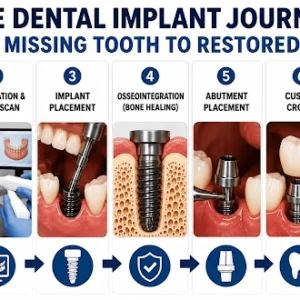
A dental implant replaces the missing tooth root with a small titanium post that is placed into the jawbone. Over the next few months, the implant naturally fuses with the surrounding bone through a process called osseointegration, creating a stable foundation for the replacement tooth. Once healing is complete, an abutment is attached to the implant, followed by a custom-made crown. This step-by-step process helps restore your tooth’s appearance, function, and long-term stability.
Implant-Supported Crown vs. Implant-Supported Bridge
- Implant-Supported Crown: Recommended when replacing a single missing tooth. It restores the missing tooth without affecting the healthy teeth on either side.
- Implant-Supported Bridge: Recommended when two or more adjacent teeth are missing. It uses two or more dental implants to support multiple replacement teeth without relying on neighboring natural teeth.
How Does a Porcelain Bridge Work?
A porcelain bridge replaces one or more missing teeth by anchoring an artificial tooth, called a pontic, to the healthy teeth on either side of the gap. These supporting teeth, known as abutment teeth, are carefully reshaped so the bridge fits securely before being permanently cemented into place. With good oral hygiene and regular dental checkups, a porcelain bridge can provide reliable function and a natural-looking smile for many years.
Dental Implant vs. Porcelain Bridge
Choosing between a dental implant and a porcelain bridge depends on your oral health, jawbone condition, and long-term goals. Your dentist considers longevity, maintenance, cost, and suitability before recommending the best option.
| Feature | Dental Implant | Porcelain Bridge |
|---|---|---|
| Best for | Single missing tooth or implant-supported multiple teeth | One or more missing teeth supported by adjacent teeth |
| Bone preservation | Preserves jawbone | Does not prevent bone loss |
| Adjacent teeth | Healthy teeth remain untouched | Requires reshaping adjacent teeth |
| Longevity | 20+ years with proper care | Typically 10–15 years |
| Procedure | Surgical placement with healing | Non-surgical, usually quicker |
| Maintenance | Clean like a natural tooth | Requires cleaning beneath the bridge |
Teeth Whitening and Dental Bonding in Charlotte, NC
Many common concerns, including stains, small chips, and minor gaps, can often be corrected with simple, minimally invasive treatments designed to enhance your smile while preserving your natural teeth.
How Does Professional Teeth Whitening Work?
Professional teeth whitening uses hydrogen peroxide or carbamide peroxide to break down stain molecules within the enamel. During an in-office treatment, your dentist applies a professional-strength whitening gel and may use a specialized light to enhance results. Professional supervision provides faster, more predictable whitening while helping reduce gum irritation and tooth sensitivity.
In-Office vs. Take-Home Whitening
In-office whitening delivers noticeable results in a single visit, while custom take-home trays brighten teeth gradually over several days or weeks. Many dentists recommend combining both treatments, using in-office whitening for immediate results and take-home trays for convenient touch-ups that help maintain a brighter smile for a longer period.
What Is Dental Bonding?
Dental bonding uses a tooth-colored composite resin to repair small chips, minor gaps, uneven tooth edges, and certain surface stains. The resin is shaped, hardened with a special curing light, and polished for a natural finish. Usually completed in one visit, bonding preserves most of your natural tooth structure.
When Are Whitening or Bonding Not Suitable?
Professional whitening cannot lighten deep internal stains or existing restorations. Large fractures, severe decay, or bite problems may require veneers, crowns, or other restorative treatments instead.
Professional Teeth Whitening vs. Dental Bonding
| Feature | Professional Teeth Whitening | Dental Bonding |
|---|---|---|
| Best for | Yellow or surface stains | Chips, small gaps, uneven edges |
| Procedure | Professional whitening gel | Tooth-colored composite resin |
| Enamel removal | None | Little to none |
| Number of visits | One or multiple | Usually one |
| Works on crowns or veneers? | No | Can repair small areas but does not whiten restorations |
Dental Veneers in Charlotte, NC
Dental veneers are a popular cosmetic treatment for improving the appearance of teeth with long-lasting, natural-looking results. Depending on your smile goals and oral health, your dentist may recommend either porcelain or composite veneers to create a more balanced, confident smile.
What Can Dental Veneers Correct?
Dental veneers are thin shells bonded to the front of the teeth to improve their appearance. They can correct worn or uneven teeth, permanent discoloration, small chips, mild gaps, and minor alignment issues. However, veneers may not be suitable for patients with untreated gum disease, tooth decay, severe teeth grinding, or significant bite problems.
Porcelain vs. Composite Veneers: What’s the Difference?
| Feature | Porcelain Veneers | Composite Veneers |
|---|---|---|
| Material | Custom porcelain | Tooth-colored composite resin |
| Stain resistance | Excellent | More likely to stain over time |
| Enamel removal | A small amount is usually required | Little to none in many cases |
| Longevity | 10–15+ years | About 5–7 years |
| Number of visits | Usually two | Often one |
| Repairs | Usually replaced if damaged | Easier to repair |
| Cost | Higher | Lower |
The veneer preparation and bonding process:
The veneer preparation and bonding process involves several carefully planned clinical and laboratory stages, including the following:
Enamel Reduction: Creating Space for a Precise Fit
The dentist removes approximately 0.3–0.7 mm of enamel from the facial surface of each tooth, depending on the veneer material and case requirements. Preserving enamel is essential because adhesive bonding to enamel provides greater bond strength, longevity, and marginal integrity than bonding primarily to dentin.
Temporary Veneers: Protecting Prepared Teeth
After tooth preparation and digital scanning or impressions, provisional (temporary) veneers may be placed while the definitive restorations are fabricated. These temporaries protect prepared teeth from sensitivity, maintain aesthetics and function, preserve gingival contours, and allow evaluation of the planned tooth shape, length, and occlusion.
Shade Matching: Replicating Natural Tooth Optics
Shade selection involves analyzing hue, value, chroma, translucency, fluorescence, and surface texture rather than simply selecting a white colour. Dentists use shade guides, calibrated photography, and digital smile design to communicate precise aesthetic requirements to the laboratory for highly natural-looking restorations.
Veneer Fabrication: Laboratory Design and Manufacturing
Using digital scans or conventional impressions, dental technicians fabricate veneers from lithium disilicate, feldspathic porcelain, or other ceramic materials. Each restoration is individually designed to achieve accurate marginal adaptation, anatomical contours, translucency, and occlusal harmony before undergoing glazing, polishing, and quality verification.
Final Cementation: Adhesive Bonding Protocol
During the final appointment, veneers are evaluated for fit, contacts, margins, and occlusion before bonding. The ceramic is etched with hydrofluoric acid (where indicated), treated with a silane coupling agent, while enamel is etched with phosphoric acid before applying adhesive resin and light-cured resin cement to achieve durable micromechanical and chemical bonding.
How Long Do Veneers Last?
Porcelain veneers typically last 10–15 years or longer with proper care, although their longevity depends on material quality, bonding technique, and oral habits. Supporting this, a systematic review and meta-analysis published in the Journal of Esthetic and Restorative Dentistry reported a 96.05% pooled survival rate for ceramic laminate veneers after a mean follow-up of 10.4 years, demonstrating excellent long-term clinical performance. Protecting veneers through occlusal management, including bite adjustment, night guards for teeth grinding, and regular dental reviews, helps minimize fracture and debonding while extending the restoration lifespan.
Laser Gum Contouring and Smile Makeovers in Charlotte, NC
Laser gum contouring and smile makeover planning combine periodontal techniques, cosmetic dentistry, and structured treatment sequencing to achieve balanced gingival aesthetics, improved tooth proportions, and predictable long-term results.
Excess Gingival Display and Laser Recontouring
Excess gingival display may result from altered passive eruption, short clinical crowns, or uneven gingival margins. Laser recontouring is considered when soft tissue modification can improve smile balance while maintaining periodontal stability.
Diode Laser Gum Contouring Procedure
Soft-tissue diode laser contouring uses controlled laser energy to precisely reshape gingival tissue. The technique supports improved visibility, reduced bleeding, minimal tissue trauma, and predictable healing compared with traditional surgical reshaping.
Smile Makeover Treatment Sequencing
Treatment sequencing ensures orthodontics, whitening, gum contouring, and veneers are performed in the correct order. Proper planning improves functional alignment, aesthetic harmony, and the durability of cosmetic results.
Cosmetic Consultation and Planning
A consultation includes clinical photography, smile analysis, and digital evaluation to develop a staged treatment plan tailored to each patient’s specific aesthetic and functional requirements.
SureSmile Clear Aligners in Charlotte, NC
SureSmile clear aligners use customised digital treatment planning and removable trays to gradually correct tooth alignment. They are designed for appropriate orthodontic cases, with costs varying based on treatment complexity and duration.
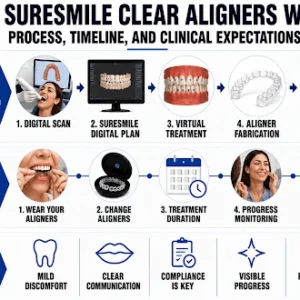
How SureSmile Clear Aligners Work
SureSmile clear aligners use digital orthodontic planning and customised tray systems to gradually move teeth while maintaining comfort, predictability, and treatment control throughout the alignment process.
- Digital Planning and Aligner Fabrication: SureSmile treatment begins with digital scans, clinical evaluation, and 3D treatment planning. The orthodontist maps tooth movement, creates a customised sequence of aligners, and determines the expected duration based on alignment needs.
- Aligner Process and Treatment Timeline: Patients wear a series of removable aligners that apply controlled pressure to shift teeth gradually. Treatment timelines vary depending on case complexity, with regular monitoring ensuring progress and adjustments when required.
- Clinical Expectations During Treatment: Clear aligners are designed for mild to moderate orthodontic concerns, including crowding, spacing, and bite irregularities. Successful results depend on consistent wear, proper oral hygiene, and scheduled dental evaluations throughout treatment.
SureSmile Cost, Insurance, Candidacy, and Treatment Sequencing With Cosmetic Work
SureSmile treatment planning considers cost factors, insurance coverage, patient eligibility, and integration with cosmetic procedures to create a coordinated approach for achieving functional alignment and aesthetic improvements.
SureSmile Cost in Charlotte, NC: Average Pricing With and Without Insurance Coverage
SureSmile treatment costs vary based on case complexity, treatment duration, and the number of aligners required. Pricing typically includes digital scans, treatment planning, aligner fabrication, and orthodontic monitoring. Supporting this, a 2026 study published in Springer found that the number of aligner pairs is the primary factor influencing treatment costs, with commercially manufactured aligners becoming more cost-efficient in cases requiring approximately 22–26 aligner pairs, highlighting how treatment complexity directly affects overall expenses. Financing and insurance benefits may further reduce out-of-pocket costs.
Candidacy Assessment for Clear Aligners
Clear aligner suitability depends on several clinical factors, including tooth movement requirements, oral health conditions, and patient commitment, as outlined below.
| Assessment Factor | Clinical Explanation |
|---|---|
| Skeletal vs Dental Malocclusion | Clear aligners effectively treat dental alignment issues, but severe skeletal discrepancies may require surgical or advanced orthodontic interventions for correction. |
| Periodontal and Oral Health Evaluation | Healthy gums, adequate bone support, and treated dental conditions are essential before beginning aligner therapy for predictable and safe tooth movement. |
| Compliance Requirements | Patients must consistently wear aligners, maintain oral hygiene, follow tray changes, and attend appointments to achieve planned orthodontic outcomes. |
| Why Not Every Patient Qualifies | Severe bite issues, complex tooth movements, or jaw irregularities may limit aligner effectiveness and require alternative treatment approaches. |
Treatment Sequencing: Why Aligners Usually Come Before Veneers or Bonding
Clear aligner therapy is often completed before veneers or bonding because tooth position affects final restoration design, bite stability, and aesthetic proportions. Aligning teeth first can reduce unnecessary enamel modification and improve restorative outcomes. However, exceptions exist when minor corrections, shape adjustments, or existing restorations require bonding or veneers before orthodontic treatment.
Post-treatment retention protocol: fixed vs removable retainers, retention timelines, and the consequences of skipping retention
The retention phase involves selecting the appropriate retainer method, understanding recommended wear timelines, and following maintenance protocols to prevent post-treatment tooth movement.
| Retention Factor | Clinical Explanation |
|---|---|
| Fixed Retainers | Bonded retainers provide continuous stabilization by maintaining tooth position, especially in areas prone to relapse after orthodontic correction. |
| Removable Retainers | Removable retainers help preserve alignment through scheduled wear, allowing flexibility while preventing gradual tooth movement after treatment completion. |
| Retention Timeline | Long-term retention is recommended because periodontal fibres and supporting tissues require extended adaptation after orthodontic tooth movement. |
| Skipping Retention | Not wearing retainers can lead to orthodontic relapse, including crowding, spacing, or changes in bite, affecting treatment stability. |
Dental Anxiety, Sedation, and the New Patient Experience at a Charlotte, NC Dentist
A comfortable dental experience focuses on managing anxiety, improving patient confidence, and providing personalised care through communication, relaxation techniques, and sedation options tailored to individual needs.
Oral Sedation for Dental Anxiety in Charlotte, NC: Types, Safety, and What to Expect
Dental sedation options are selected based on anxiety levels, treatment complexity, and patient health factors, ensuring safe care with appropriate monitoring and preparation.
| Sedation Aspect | Clinical Explanation |
|---|---|
| Types of Dental Sedation | Nitrous oxide provides mild relaxation while maintaining full awareness. Oral sedation uses prescribed medication for deeper anxiety control, whereas IV sedation allows adjustable sedation levels with closer monitoring for complex procedures. |
| How Oral Sedation Works | Oral sedation typically involves prescribed anxiolytic medications that reduce nervous system activity. The medication is taken before treatment, creating relaxation, reduced anxiety, and possible temporary amnesia depending on dosage and individual response. |
| Medical Screening Before Sedation | Dentists evaluate medical history, current medications, allergies, and potential drug interactions before prescribing sedation. Patients may require fasting instructions, pre-treatment guidelines, and a responsible escort depending on sedation depth. |
| Combining Multiple Procedures With Sedation | Sedation can help patients remain comfortable during longer appointments, allowing dentists to complete multiple treatments in one visit. This approach may reduce the number of appointments and improve overall treatment efficiency. |
What New Dental Patients in Charlotte, NC Can Expect: Appointments, Technology, and Payment
A first dental visit involves detailed evaluation, advanced diagnostic technology, and financial planning options to create a clear path for personalised oral care. Understanding the process helps patients prepare for appointments, treatment decisions, and payment arrangements.
New Patient Dental Appointment
Initial visits include full-mouth X-rays, periodontal probing, oral cancer screening, and a detailed consultation to discuss findings and develop a customised treatment plan.
Digital Dental Technology
Handheld digital X-rays help reduce radiation exposure while providing clearer images. Intraoral cameras capture detailed views of teeth and gums, improving diagnosis and patient understanding.
Insurance and Financing Options
Charlotte dentists explain in-network and out-of-network benefits, preventive coverage levels, and benefit verification. Financing options such as CareCredit may allow eligible procedures to be paid through monthly plans.
Conclusion
Now that you have a better understanding of your dental care options, choosing the right practice becomes much easier. At Smile Savvy, we’re dedicated to delivering personalised care with a patient-first approach in a welcoming environment. From your first visit to your long-term oral health journey, our team is committed to helping you smile with confidence for years to come.
Book your appointment today and let us make your dental experience a positive one.
Frequently Asked Questions About Dental Care in Charlotte, NC
Can I whiten my teeth after getting porcelain veneers?
No. Whitening treatments only affect natural tooth enamel and do not change the color of porcelain veneers. If you plan to whiten your teeth, it’s usually best to do so before veneer placement.
How do I know if veneers are the right cosmetic treatment for me?
A consultation allows your dentist to evaluate your smile goals, oral health, and expectations to determine whether veneers are the most suitable option or if another cosmetic treatment would provide better results.
Are veneers customized for every patient?
Yes. Every veneer is individually designed based on your tooth dimensions, facial characteristics, bite, and aesthetic preferences to create a personalised and balanced smile.
How soon can I return to my normal routine after getting veneers?
Most patients resume their normal daily activities immediately after the appointment, with only minor adjustments as they become accustomed to their new restorations.
What should I discuss during my veneer consultation?
Sharing your smile goals, lifestyle, aesthetic preferences, and any previous dental concerns helps your dentist create a treatment plan tailored to your expectations.